
Science Integration Q&A with Skyli McAfee
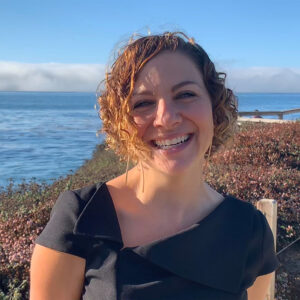
A Conversation with Skyli McAfee, Executive Director of Ocean Science Trust and OPC Science Advisor, OPC-SAT Co-Chair
- What is science integration?
- In recent years science integration has gained a lot of interest. How did this come about?
- Why do we need organizations specifically dedicated to science integration?
- What are the key elements of an effective boundary organization?
- How does OST approach science integration?
- What is California’s approach to coastal and ocean science integration?
- How do you stay independent when your funders have interests?
- This seems like a lot of process and money. What is the value for the state and its coastal resources, and environment?
- What is OST's vision for California coastal and ocean science integration in the next 20 years?
- What will OST look like in the next 20 years?
What is science integration?
Simply put, science integration is about getting scientists and decision-makers working together on difficult problems. Managing coastal and marine environments presents monumental challenges to policy-makers, natural resource managers, and other citizens. Science has the potential play a constructive role in confronting those challenges, but defining a role for science in a complex landscape of politics, values, and institutions can be difficult. It involves relationship building, utilizing innovative science communications techniques, and facilitating processes that both raise the scientific quality and add value to the work of multiple institutions and communities. And crucially, it requires developing trusted sources of independent, authoritative scientific information.
OST focuses on providing useful and unbiased information to policy-makers and managers that is grounded in the best scientific research, and expert knowledge (supply). We also proactively identify the needs of decision-makers, and help scientists meet those needs (demand). Reconciling the “supply” and “demand” of scientific information is a core part of science integration. This involves scientific processes that minimize bias, such as peer review, translating scientific research for non-scientists, and using diplomacy to effectively engage stakeholders and decision-makers.
In recent years science integration has gained a lot of interest. How did this come about?
Scholars, policy-makers, and managers in a range of fields increasingly recognize that we can’t just assume knowledge produced by scientists will get used, or that scientists will conduct work that is most relevant to policy-makers and managers. We need to do a better job connecting the results of publicly funded research to the problems they were meant to address, such as clean air, sustainable ecosystems, and healthy communities.
A variety of innovative programs have begun to confront this problem head-on by working to topple the boundaries between science and decision-making in an effort to improve the effectiveness and overall societal value of each. Over the last decade, seminal reports such as the U.S. Commission on Ocean Policy, the Pew Oceans Commission, and most recently President Obama's Interagency Ocean Policy Task Force, have acknowledged the challenge of linking knowledge with decision-making. They identify the need for science and emphasize that science can improve our understanding of policy and management needs, and help generate the best options for sustaining important natural resources.
To us, this is a loud and clear call to action.
Why do we need organizations specifically dedicated to science integration?
Scientists are recognizing that decision-makers need their help and are asking for it, but they need organizations like OST to help facilitate this interaction. Social scientists have found that information is more likely to be used in a decision-making process if it is salient, legitimate, and credible. OST grapples with this balance regularly. We published a paper in Coastal Management Journal reflecting on some of our experiences with it in coordinating the Oil and Gas Platform Decommissioning Study.
Appropriately balancing these considerations requires an intimate understanding of the policy and management context as well as the scientific realm. It also requires effective communication and trust between scientists and decision-makers, who operate in very different worlds, and are rarely encouraged to work together. For example, a scientist advances in his or her own field by publishing journal articles read by other scientists. He or she doesn’t necessarily get credit for working directly with a manager in the Department of Fish and Game. By specializing in navigating the boundary between social worlds, a boundary organization can add tremendous value to the work of both scientists and decision-makers.
National Research Council, Roundtable on Science and Technology for Sustainability 2006. Linking Knowledge with Action for Sustainable Development: The Role of Program Management – Summary of a Workshop. William C. Clark and Laura Holliday, rapporteurs. Washington: National Academic Press.
What are the key elements of an effective boundary organization?
OST is a leader in this movement.
Successful boundary organizations, above all, must be accountable to every “side” of the boundary. They must establish long-term relationships and communicate effectively with stakeholders in government, the scientific community, and the broader public. This means building expertise in multiple domains. It also requires translating specialized knowledge from one area of expertise into forms that are accessible and usable in other areas.
Accountability does not just require a technical understanding of problems in various domains. It also requires cultural understanding. For example, one must not only understand the work of a particular scientific field, but also the various constraints and opportunities facing scientists in that field in order to determine the appropriate management entry points for their work. The same applies to decision-makers, who may want to utilize science, but are limited by a host of political, practical, and fiscal considerations.
The challenge of communication, combined with the vast differences in cultural and institutional settings, means that a boundary organization must take a long term view. It must establish processes that encourage boundary interactions to occur iteratively over time. This allows different groups to slowly adjust to the challenge of working together, and become more effective as they learn from, and mutually benefit, one another.
How does OST approach science integration?
We focus on three important functions. First, we design processes that improve and sustain interactions between State decision-makers, the scientific community, and other stakeholders in coastal and marine policy. We cannot always predict when a policy window will open or shut; or when a breakthrough result might suggest a need for policy action. In this complex landscape, OST balances the need to respond quickly to opportunities with the need to proactively identify or create opportunities. I would point to our Agency Science Needs Assessment and CMSP Initiatives as key examples of our more proactive, forward-thinking stance.
Second, we work to provide independent, credible, and timely assessments of the science related to pressing marine and coastal policy issues. An example of an ongoing project is the Aquatic Invasive Species Vector Risk Assessments. This project will inform decision-making challenges around an issue characterized by a complicated mix of regulations, politics, and values, as well as a significant amount of scientific uncertainty. OST’s role is to put in place a project structure and a series of oversight mechanisms that will result in a product that provides the best available scientific information in a clear, concise manner and in a format useful to decision-makers.
We take great care in the production of our reports. For example, we recently released a literature review on plastic debris in the California marine ecosystem. Not only is this report written and presented to broad audiences in a compelling, accessible manner – the report and its methods were thoroughly peer reviewed by experts in marine ecology, environmental engineering and water quality, and marine policy. It is as rigorous as anything published in a scientific journal.
Third, OST has strategically positioned itself at the nexus between the state and scientific communities. This is exemplified by the OST executive director’s role as science advisor to the state, and our work coordinating all activities of the Ocean Protection Council Science Advisory Team (OPC-SAT). As science advisor, I represent the scientific community at the policy table. I broker the dialogue among resource managers and scientists, beginning with identifying managers' highest priority information needs – at which point OST will engage the OPC-SAT for guidance, input, and as a portal to the wider scientific community.
With this structure in place, we are prepared at a moments notice to coordinate or provide ongoing scientific and technical advice to the state on a regular basis. And as an organization, OST is committed to continually raising the involvement of the OPC-SAT in all state policies and decisions where appropriate.
Finally, OST is constantly looking for opportunities to learn from others, and communicate our own experiences to other organizations pursuing science integration. Through publications and a variety of formal and informal interactions, we are building a boundary organization community of practice.
What is California’s approach to coastal and ocean science integration?
California has a uniquely supportive institutional environment, which promotes and rewards innovative thinking. California's legislature recognizes the importance of science integration, and has, in fact, made it law. In 2001, California passed the California Ocean Resources Stewardship Act (CORSA), which requires OST to act as a true boundary organization - one that links science to policy and management decisions. The State also took its commitment one step further and in 2004 passed the California Ocean Protection Act (COPA), which created the California Ocean Protection Council (OPC) to coordinate all ocean and coastal resources management agencies and integrate independent science into its policy decisions. The OPC formally designated the OST executive director as its science advisor, and requests OST to coordinate all activities of OPC-SAT to better inform the State.
OST could not perform as an effective boundary organization without the State’s recognition and demonstrated support of the importance of science integration.
How do you stay independent when your funders have interests?
Although OST accepts both public and private money, funders are not allowed – nor have they tried – to direct outcomes. We have in place a series of formal internal policies and external oversight mechanisms that constitute a "firewall" of protection around all our programs, products, and processes.
Our independence lies in dual accountability to decision-makers, who serve the public, and the scientific community, which is subject to its own strict norms of openness and objectivity. Our existence depends on serving these two groups effectively, and enabling them to participate with one another without sacrificing their own core values. We could not accomplish this without maintaining our own credibility, legitimacy, and transparency in their eyes, and in the eyes of the public at large.
This seems like a lot of process and money. What is the value for the state and its coastal resources, and environment?
The choice is not between more or less process. Rather, it is between more or less effective processes. Boundary organizations like OST are needed because the relationship between science and government has not worked well in the past, especially when it comes to natural resource management. It is our conviction that providing rigorous, peer-reviewed science to decision-makers and assisting them in understanding the tradeoffs of different decisions is the best method for cost-efficient, durable, and effective policy and management decisions. We would also argue that our work coordinating the OPC-SAT creates efficiency. They act as our portal to the wider scientific community – ready to respond when OST identifies a need or creates an opportunity. A small investment in OST helps the State extract much greater value from its considerable commitment of public funds to environmental science, research, and management.
Another key indicator of value is the breadth in our funding, which all goes to directly support state decisions. The fact that OST receives funding from such a variety of sources speaks to the broad appeal of the values we serve, such as transparency, effective government, a better environment, and sound science.
What is OST's vision for California coastal and ocean science integration in the next 20 years?
California is currently going through a difficult fiscal and governmental contraction. But whatever the budgetary situation, it is essential that there be a healthy working relationship between science and the State. In our vision for California, science and decision-making continue to co-evolve such that each one makes the other stronger. OST’s example in the “boundary” between these two will come to be seen as an essential component of science governance, stewardship of the environment and other essential public values.
For example, our MPA Monitoring Enterprise will soon be the central information hub for California's network of marine protected areas (MPAs). We intend to demonstrate that our information and data are unbiased and will inform management decisions regardless of which side of the MPAs debate you are on. Our data products will be thorough, robust, and generated in a transparent way, such that they are regarded as the informational foundation that hosts the debate surrounding MPA policies, and the range of associated perspectives and arguments. Further, our data and the products generated from those data will be publically available, what we refer to as the 'democratization of data,' so stakeholders from across the spectrum can access and interact with it.
In the next 20 years, we would like to see a new cohort of science specialists who can work effectively within the boundary, be valued for that work, and help the State fulfill the aspirations of its citizens. We want science integration to clearly demonstrate and be recognized as a cost efficient and thoughtful mechanism for creating long lasting and effective management decisions.
We envision healthy California coastal and ocean ecosystems that are supported through collaborative processes where both natural and social scientists, and industry have a seat at the table, along with an educated public acting as stewards and demanding science informed decision-making.
What will OST look like in the next 20 years?
We want OST to be a recognized thought leader and innovator on science integration as both an intellectual and practical problem. Stakeholders, policy-makers and managers throughout the State will look to us for objective and useful information related to contemporary challenges in ocean and coastal management. We will be an important catalyst for research that is strategically focused on the most important problems from a policy and management perspective.
Finally, OST will be widely recognized as the honest broker of scientific information for the public.